High blood pressure (hypertension) is one of the most common health conditions affecting adults in Nigeria, and one of the strongest contributors to rising blood pressure is a poor diet with regular intake of excess salt, unhealthy fats, added sugars, and processed foods.
Most local Nigerian dishes are not harmful on their own. The challenge often comes from how they are prepared and the amount of salt, oil, or seasoning added during cooking. So, in this guide, we will break everything down in a simple, practical way. You will learn:
- Common Nigerian foods to avoid or reduce significantly
- Foods that are safer when taken in moderation
- Everyday meals that can be made healthier with small adjustments
With this guide, you can make small, consistent improvements in how you choose and prepare food, and make a meaningful difference in managing blood pressure over time.
FOODS TO AVOID IF YOU HAVE HIGH BLOOD PRESSURE
Over time, foods high in sodium, added sugar, and unhealthy fats can affect blood flow through the body, increase fluid retention, and place extra strain on the heart and blood vessels. The result is often a gradual rise in blood pressure that becomes harder to control.
Below are common Nigerian foods that should be significantly reduced, along with simple, practical replacements that support better heart health.
Instant Noodles
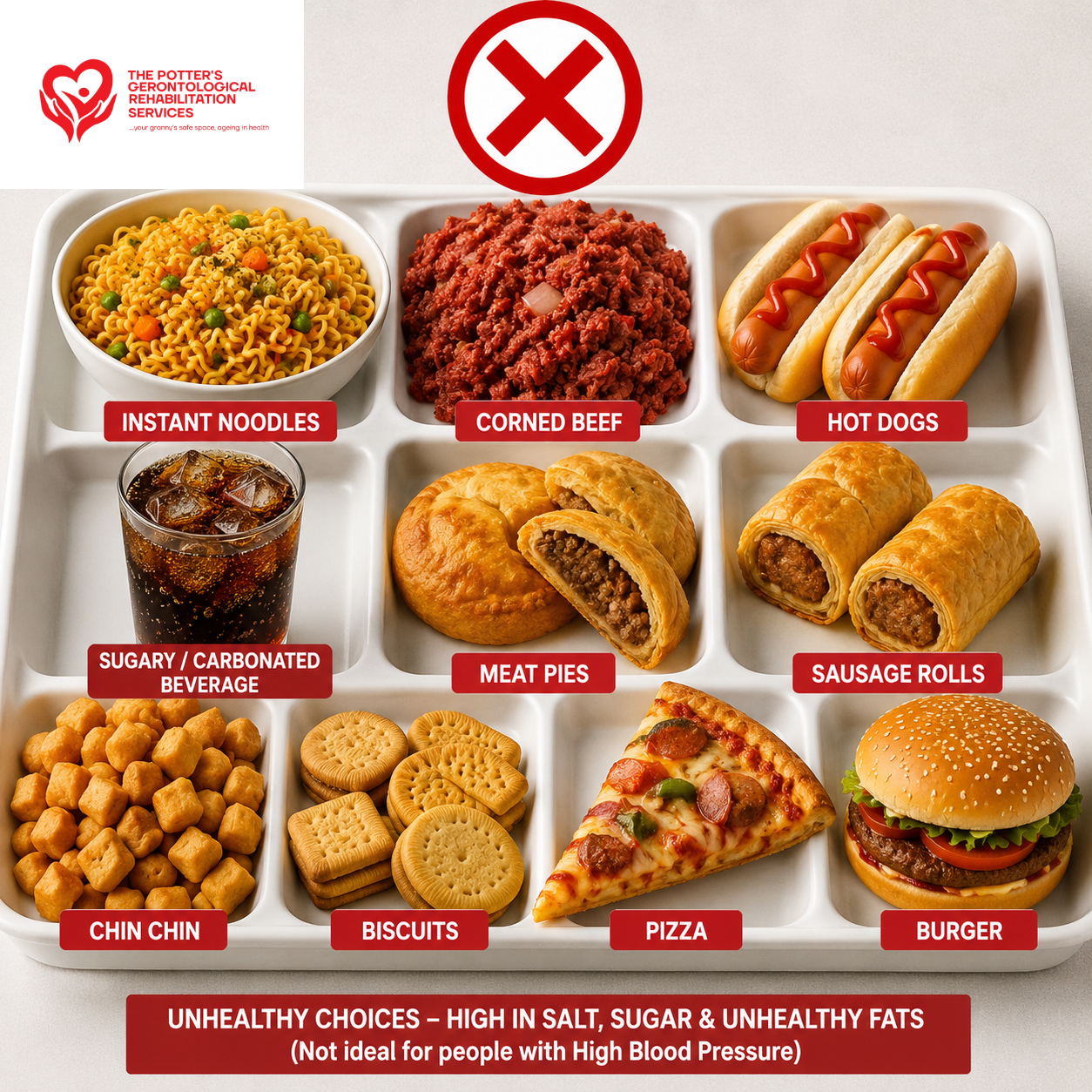
Instant noodles are one of the most common convenience meals, but they are also highly processed and very high in sodium. The World Health Organization recommends that you take about 5g of salt each day. But you get 35% to 95% of this amount from an average packet of instant noodles.
Excess sodium encourages the body to retain more water, which increases blood volume, puts more pressure on blood vessel walls, and contributes to consistently elevated blood pressure levels. Instead of relying on instant noodles, a healthier option is homemade noodles prepared with vegetables, natural spices, and little or no seasoning cubes.
Processed Meats (Sausages, Corned Beef, Hot Dogs)
Processed meats like sausages, corned beef, and hot dogs are often high in salt and provide over 60% of the daily salt requirements. They also often make use of nitrates and nitrites as preservatives. The salt and additives help extend shelf life but can contribute to long-term cardiovascular strain.
A better alternative is fresh protein sources from fish, beans, or lean chicken prepared with minimal salt and oil.
Carbonated Drinks and Sugary Beverages
Carbonated drinks and sugary beverages contain large amounts of added sugar, especially fructose-based sweeteners, which have been linked to oxidative stress, fat accumulation, and damage to blood vessels over time. These changes can place extra strain on the cardiovascular system and make blood pressure harder to control.
Because sugary drinks are less filling, frequent intake can also make you take in excess calories to satisfy your hunger, leading to gradual weight gain, which is a major risk factor for hypertension.
Healthier drinks include water, unsweetened zobo, natural coconut water, and low-sugar homemade drinks.
Energy Drinks
Energy drinks have high levels of sugar and higher levels of caffeine than coffee drinks. Because of this, your heart rate and blood pressure go up after taking energy drinks. While occasional intake may not be harmful, frequent use places repeated stress on the cardiovascular system and may worsen existing hypertension.
Highly Processed Snacks (Chips, Meat Pies, Sausage Rolls, Chin Chin, Biscuits)
Highly processed snacks such as chips, meat pies, sausage rolls, chin chin, and biscuits are typically made with refined flour, unhealthy fats, and high salt content. These foods lack fiber, are digested quickly, provide little satiety, and often lead to overeating. Most also contain trans fats, which are linked to inflammation, reduced blood vessel health, and poor overall health.
Healthier alternatives include fresh fruits, roasted groundnuts, or boiled corn, which provide more fiber and do not contribute to rapid blood sugar spikes or excess sodium intake.
Fast Foods and Street Foods (Shawarma, Pizza, Burgers)
Fast foods and street foods like shawarma, pizza, and burgers are often high in sodium, unhealthy fats, sugars, and calories. Taking fast food frequently and in large portions contributes to weight gain, obesity, high cholesterol levels, and high blood pressure. Many of these meals also lack sufficient fiber-rich vegetables and essential nutrients that help balance sodium levels in the body.
For a healthier alternative, you can prepare similar meals at home by grilling or baking and adding vegetables.
Excess Seasoning Cubes and Salt Usage
In addition to salt intake, seasoning (bouillon) cube usage in cooking is one of the major sources of excess dietary sodium in sub-Saharan Africa, where these cubes are common. When sodium intake is consistently high, the kidneys struggle to properly regulate fluid balance, leading to increased blood volume and sustained pressure on blood vessels. Over time, this contributes to long-term strain on both the heart and the circulatory system.
Instead of using a lot of seasoning cubes and salt when cooking, a better approach is to use natural seasonings such as garlic, ginger, onion, scent leaf, and uziza, which enhance flavour without excessive sodium.
Deep-Fried Foods (Puff-Puff, Fried Yam, Fried Plantain, Akara)
Deep-fried foods such as puff-puff, fried yams, fried plantains, and akara absorb large amounts of oil during cooking. This increases intake of unhealthy fats, which can lead to obesity, high blood pressure, and cardiovascular strain over time.
These foods can be better prepared using air-frying, baking, or grilling methods, which significantly reduce oil content while still maintaining taste.
FOODS TO TAKE IN MODERATION
These foods are not harmful on their own, but the way they are prepared and their portion sizes can affect blood pressure over time. So they should be taken in moderation, prepared healthily, and paired with heart-friendly foods.
- White Rice (Especially with Oily Stews)
White rice is low in fiber and is often paired with oily, salty stews, which can increase calorie and sodium intake over time. To make it healthier, reduce oil in stews and pair with vegetables like ugu, spinach, or carrots alongside proteins such as fish or beans. - White Bread
White bread is made from refined flour with low fiber. It digests quickly and may contribute to blood sugar spikes and overeating. A better option is to reduce portion size, pair with protein-rich foods like eggs or groundnuts, and choose whole-grain bread when possible. - Garri (Especially with Sugar or Sweet Additives)
Adding excess sugar to garri increases unnecessary calorie and sugar intake, which may affect weight and cardiovascular health over time. It is better taken in moderation without sugar and paired with foods like groundnuts, beans, or milk alternatives for better balance. - Swallows (Eba, Fufu, Pounded Yam, Amala)
Large portions of swallows can make meals too heavy on carbohydrates and reduce overall diet balance. The healthier approach is portion control and pairing them with vegetable-rich soups like okra, efo riro, or bitter leaf soup instead of overly oily soups.
FOODS TO MODIFY FOR A HEALTHIER VERSION
You may not need to remove these meals from your diet, but simple adjustments in preparation methods can make them more supportive of healthy blood pressure control while still keeping them enjoyable and familiar. Here are some adjustments you can make to common meals:
- Soups (Egusi, Ogbono, Banga, Okra) – Reduce the amount of palm oil used and increase vegetables like ugu, waterleaf, or bitter leaf. Use more fish or lean protein instead of large amounts of fatty meat, and rely on natural flavourings like onions and pepper instead of excess seasoning cubes.
- Beans Dishes (Beans Porridge, Moi Moi, Akara) – Reduce oil and salt during preparation. Pair with vegetables for fiber, unsweetened pap, or moderate portions of rice for a more balanced meal. Choose lighter options like ekuru, which is prepared without oil.
- Stews and Sauces – Reduce excess oil and seasoning cubes. Use fresh tomatoes, onions, garlic, ginger, and peppers for flavour instead. Lighter stews with less oil can still be rich, satisfying, and more supportive of heart health.
- Local Drinks (Pap, Kunu, Tom Brown, Tamba) – Reduce or avoid added sugar and prepare them as naturally as possible. Pair pap with protein-rich foods like beans, soy milk, or groundnuts to improve its nutritional value and help maintain better blood sugar and blood pressure balance.
Summary
Managing high blood pressure does not mean giving up Nigerian foods or traditional meals. The key message throughout this guide is balance, moderation, and better preparation methods. Most Nigerian foods can still be enjoyed when cooked and combined in healthier ways.
Support from The Potter’s Gerontological Services
Managing high blood pressure, especially in older adults, often requires more than just general diet advice. It may require structured guidance, ongoing monitoring, and personalized meal plans.
The Potter’s Gerontological Services is a healthcare support provider focused on elderly care and chronic condition management in Nigeria. We are dedicated to helping individuals and families navigate health conditions such as hypertension with clarity and structure.
Our services include personalized dietary guidance for blood pressure management, elderly-focused care planning and monitoring, and support for families managing long-term health conditions. Contact us today to get started.