If you or an older family member has been advised to start physiotherapy, one of the first challenges you may face is simply getting to appointments consistently.
It can be difficult and expensive to stay consistent because of transportation and long travel distances, especially in Abuja. For some older adults, mobility limitations, post-hospital fatigue, and the effort and planning required to leave home several times a week can become a barrier to recovery itself.
Fortunately, physiotherapy does not always have to happen in a clinic; you can get home-based rehabilitation as an Abuja resident.
Home-based physiotherapy allows qualified physiotherapists to deliver rehabilitation services in the comfort of your home, making treatment more accessible while maintaining professional standards of care. For many older adults, it can be a practical way to stay consistent with rehabilitation and continue making progress toward recovery goals.
What Is Home-Based Physiotherapy?
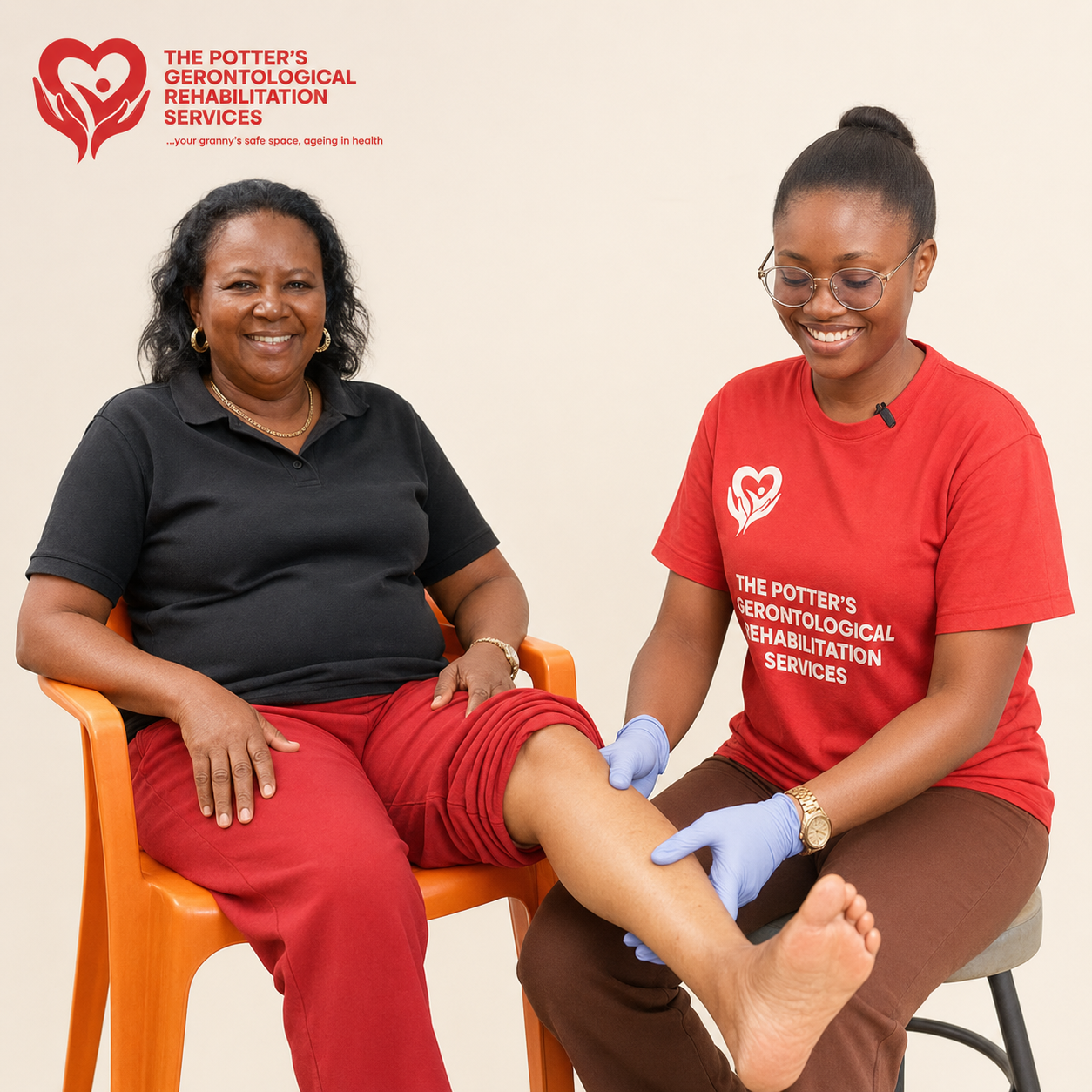
Home-based physiotherapy is a rehabilitation service where a licensed physiotherapist visits your home to assess, treat, and support recovery from mobility, pain, or physical function challenges.
The main difference between home-based and clinic-based physiotherapy is the location of care, not its quality. The same professional principles, treatment approaches, and rehabilitation goals apply in both settings.
A typical home physiotherapy session may include:
- Physical assessment
- Hands-on treatment where appropriate
- Guided exercises
- Balance and mobility training
- Strength and flexibility exercises
- Education for patients and caregivers
Because treatment takes place where you live, the physiotherapist can also identify practical challenges that may affect your movement, safety, or independence.
Most of our sessions at The Potter’s Gerontological Services typically last between 45 minutes and one hour. The recommended frequency depends on your condition, recovery goals, and overall health status. Some people may require several sessions each week initially, while others benefit from less frequent follow-up visits.
Who Is Home-Based Physiotherapy For?
Home-based physiotherapy can benefit many different people, but it is especially valuable when travelling to a clinic is difficult, uncomfortable, or unsafe.
You may benefit from home physiotherapy if you:
- Live with mobility limitations that make travel challenging
- Are recovering from a medical condition
- Are mostly bed-bound or housebound
- Find it difficult to access regular transportation for rehabilitation appointments
- Prefer your rehabilitation appointments at home because of convenience
For older adults, the service often removes one of the biggest barriers to recovery: getting to treatment consistently.
Many people begin rehabilitation with good intentions but struggle to maintain appointments. Home-based care helps address those challenges by bringing rehabilitation directly to the patient.
Conditions Commonly Treated Through Home Physiotherapy
A wide range of conditions can be managed through home-based physiotherapy.
Stroke Rehabilitation and Neurological Recovery
Stroke can affect strength, balance, coordination, walking ability, and independence in daily activities. Physiotherapy focuses on helping you regain function, improve mobility, and rebuild confidence in movement.
Post-Surgical Rehabilitation
Recovery after procedures such as joint replacement surgery, fracture repair, or spinal surgery often requires structured rehabilitation. Home physiotherapy can help restore strength, flexibility, and mobility during the recovery process.
Arthritis and Joint Pain Management
Joint stiffness and pain can make everyday activities more difficult. Physiotherapy helps improve joint movement, reduce discomfort, and support safer mobility.
Balance and Fall Prevention
If you have experienced falls or feel unsteady when walking, physiotherapy can help improve balance, coordination, and confidence while moving around your home and community.
Chronic Back and Neck Pain
Persistent pain can affect your ability to work, exercise, sleep, or perform daily tasks. A physiotherapist can identify contributing factors and develop exercises to improve movement and reduce discomfort.
Age-Related Mobility Decline
Many older adults notice gradual changes in strength, endurance, flexibility, and walking ability over time. Physiotherapy can help maintain mobility and support continued independence.
Muscle Weakness and Deconditioning
Long periods of illness, hospitalization, or inactivity often lead to muscle weakness. Rehabilitation focuses on rebuilding strength and improving physical function safely and progressively.
Why Home-Based Physiotherapy Can Be Beneficial for Older Adults
For many older adults, treatment at home offers advantages that go beyond convenience.
Receiving care in a familiar environment often reduces anxiety and allows patients to focus more fully on rehabilitation. There is no need to navigate traffic, crowded waiting rooms, or physically demanding trips to healthcare facilities.
Home-based care also allows treatment to be tailored to your actual living environment.
Instead of practising mobility exercises in a clinic setting, your physiotherapist can assess how you move around your own home, use your own stairs, navigate your own bathroom, and perform the activities that matter most to your daily life. This often makes rehabilitation more practical and relevant.
Family members and caregivers can also be more involved in the recovery process. They can observe exercises, learn safe mobility techniques, and better understand how to support rehabilitation between sessions.
Another major benefit is consistency.
When transportation barriers are removed, it becomes easier to attend scheduled sessions regularly. Consistency is one of the most important factors influencing rehabilitation outcomes.
Home physiotherapy may also reduce the amount of time spent travelling and waiting for appointments, allowing more of your energy to be directed toward treatment itself.
That said, home-based physiotherapy is not always the best option for every situation. Some conditions require specialised equipment or advanced facility-based interventions that are only available in a clinic or hospital setting. A qualified physiotherapist can help determine which approach is most appropriate for your needs.
What to Expect During Your First Home Physiotherapy Session
Your first session is primarily focused on understanding your condition, challenges, and goals.
The physiotherapist will begin with a detailed assessment of your physical abilities, movement patterns, pain levels, balance, strength, and overall function.
You may also be asked about:
- Your medical history
- Recent surgeries or hospitalizations
- Current medications
- Existing health conditions
- Previous physiotherapy experiences
The conversation is just as important as the physical assessment because it helps the physiotherapist understand what you hope to achieve.
For some people, the goal may be walking independently again. For others, it may be climbing stairs safely, reducing pain, preventing falls, or returning to everyday activities.
At the end of the assessment, a personalised treatment plan will usually be developed based on your specific needs and rehabilitation goals.
Before the visit, it is helpful to have any relevant medical reports, discharge summaries, imaging results, medication lists, or referral notes available if possible.
How to Get Started with Home-Based Physiotherapy in Abuja
Choosing the right provider is an important first step.
Before booking a service, verify that the physiotherapist is properly qualified and licensed to practise. Professional credentials, rehabilitation experience, and familiarity with older adult care should all be considered.
It is also worth asking questions such as:
- What experience do you have with my condition?
- How are treatment plans developed?
- How is progress monitored?
- How often will sessions be needed?
- What happens if my needs change over time?
The more information you provide during the initial consultation, the easier it will be for the physiotherapist to recommend an appropriate treatment plan. Be prepared to discuss diagnoses, symptoms, recent medical care, medications, and rehabilitation goals.
Finally, remember that physiotherapy is rarely a one-time intervention. Recovery often requires commitment, consistency, and patience. Understanding the expected treatment schedule from the beginning can help you plan effectively and stay engaged in the rehabilitation process.
Start Your Recovery Journey With The Potter’s Gerontological Services
At The Potter’s Gerontological Services, we provide home physiotherapy services in Abuja designed to support older adults throughout their rehabilitation journey.
Our team works with individuals recovering from stroke, surgery, falls, mobility decline, and other conditions that affect movement and independence. We also offer virtual physiotherapy consultation options for individuals who need guidance, monitoring, or professional support remotely.
Every rehabilitation plan is tailored to the individual’s needs, goals, and living situation. We also work closely with families and caregivers to ensure support continues between therapy sessions.
Contact us today to learn more about our home-based physiotherapy services in Abuja or schedule a consultation.