
Nigeria’s life expectancy is a figure that often appears in news headlines, health reports, and conversations about the country’s development challenges. And it tends to prompt the same questions: Is it really that low? Does that mean most Nigerians die that young? And what does it mean for someone who is already in their sixties or seventies?
These are reasonable questions, but the answers are more nuanced than a single number suggests. Per the United Nations Population Division, Nigeria’s life expectancy at birth is approximately 54.95 years as of 2026, a figure well below the global average. But that number does not tell the whole story about how long Nigerians actually live, particularly those who have already reached older age.
This article explains what Nigeria’s life expectancy figure actually means, why it remains relatively low, and, most importantly, what it means for Nigerians who are already in their sixties, seventies, and beyond.
What Is the Life Expectancy in Nigeria?
Life expectancy is an estimate of how long a person is expected to live based on the death rates recorded in a particular place and year.
- At birth: The expected number of years a newborn may live.
- At age 60: The expected number of additional years a 60-year-old may live.
As of 2026, Nigeria’s projected life expectancy at birth is 54.95 years or approximately 55 years for both sexes, according to the United Nations. This is lower than the African average of about 64.4 years and considerably below the global average of around 73.8 years.
Does a life expectancy of around 55 mean Nigerians generally die at that age?
No. A life expectancy of 54 years does not mean that the average Nigerian adult dies at 54.
Life expectancy at birth reflects causes of death across the course of a person’s life. Deaths during infancy and childhood, as well as deaths among younger adults, can therefore lower the overall figure.
Consider what happens at different stages of life:
- At 20 or 30: A person has already survived the risks associated with infancy and childhood, so their remaining life expectancy is not simply the difference between 54 and their current age.
- At 50, 60 and beyond: By this age, a person has already passed through many of the risks associated with birth, childhood and young adulthood. Their expected life expectancy may be influenced by factors such as chronic diseases, access to healthcare, lifestyle and age-related health conditions.
In other words, the 54-year figure is not a countdown. Reaching an older age changes the calculation because the person has already survived the risks associated with earlier stages of life.
This is why many Nigerians can and do live well into their seventies, eighties and beyond.
Is Nigeria’s life expectancy improving?
Yes, particularly when we look at the long-term trend.
Nigeria’s life expectancy has improved considerably over the past two decades. According to the WHO, life expectancy at birth increased from 54.1 years in 2000 to 63.4 years in 2021, an improvement of 9.34 years. This suggests that, despite the challenges affecting health outcomes in Nigeria, people are living longer on average than they did at the beginning of the 2000s.
This improvement reflects progress in areas such as child survival, disease control, and access to healthcare.
The picture is not without challenges. Progress has been uneven, and Nigeria continues to face significant health burdens. But the long-term direction is one of improvement rather than stagnation.
Why do different sources report different figures?
If you have searched for Nigeria’s life expectancy, you may have come across different figures. The WHO reports life expectancy at birth at 63.4 years based on its 2021 data, while the United Nations provides a 2026 projection of 54.95 from its 2024 World Population Prospects revision.
The difference does not mean that Nigeria’s life expectancy fell between 2021 and 2026. These figures come from different sources, reference years and modelling approaches, so they should not be compared as though they represent a continuous rise or decline. WHO also notes that incomplete mortality data, particularly among adults and older people, requires modelling and can lead to differences between estimates.
When comparing life expectancy figures, always check the source, the year it represents, and whether it is an observed estimate or a projection.
Does Nigeria Have the Lowest Life Expectancy?
Nigeria has one of the lowest life expectancy figures in the world. The 2026 UN projection puts Nigeria’s life expectancy at birth at approximately 55 years for both sexes combined, the lowest among the countries in the dataset.
For comparison, Chad is projected at 55.6 years, while South Sudan is at 58.0 years. The projected average for Africa is about 64.4 years, compared with approximately 73.8 years globally.
Being at the bottom of the ranking matters because life expectancy gives a broad picture of health and survival in a population. Still, the figure should not be interpreted to mean that Nigerians generally die at 55. Rather, it highlights the wider health challenges that can shorten lives and the potential for improvements in healthcare, disease prevention and living conditions to help people live longer.
Why Is Life Expectancy in Nigeria Relatively Low?
There is no single reason why Nigeria’s life expectancy remains relatively low. Several interconnected factors influence how long people live and the health challenges they experience throughout their lives. These include factors related to healthcare, income, living conditions, education, and the wider environment.
Some of the key factors include:
- Maternal and child mortality rates remain high.
- Infectious diseases, including malaria, tuberculosis, and HIV/AIDS, remain significant health concerns.
- Access to healthcare remains limited for many Nigerians.
- Government spending and investment in healthcare remain inadequate.
- Poverty and income inequality affect people’s health outcomes.
- Low per capita income can limit access to essential health resources.
- Unemployment can affect people’s ability to afford healthcare and other basic needs.
- Education and health literacy can influence health outcomes.
- Access to safe drinking water and adequate sanitation remains a challenge in many communities.
- Poor nutrition and limited access to adequate food can affect health throughout life.
- The cost of medicines and healthcare can make treatment less affordable.
- Exchange rate fluctuations can increase the cost of imported medicines and medical equipment.
- Poor health infrastructure and limited availability of medical equipment can affect the quality of care.
- Road traffic injuries and other causes of premature death contribute to lower life expectancy.
- Noncommunicable diseases, including hypertension, diabetes, stroke and cardiovascular disease, are an increasing health concern.
- Environmental conditions can affect people’s health and risk of disease.
- Health outcomes differ between urban, rural and underserved communities.
What Does Nigeria’s Life Expectancy Mean for Older Nigerians?
Nigeria’s life expectancy at birth is not a prediction of how long any individual will live. So if you are already 60, 65 or 70, the metric that is more useful to you is healthy life expectancy.
Healthy life expectancy measures the average number of years a person can expect to live in full health, taking into account the years lived with illness or disability. In Nigeria, healthy life expectancy at birth was 54.9 years in 2021, according to the World Health Organization.
The distinction is important because living longer does not necessarily mean spending those additional years in good health. Healthy ageing is therefore not only about adding years to life. It is also about maintaining strength, mobility, independence and wellbeing throughout those years.
How Can You Support Healthy Ageing in Later Life?
While many factors influence how long we live, there are practical steps that can support better health, independence and quality of life as we age.
- Keep up with regular health checks. Routine screening can help detect conditions such as hypertension, diabetes and kidney disease early.
- Manage existing health conditions consistently. Taking prescribed medications, attending follow-up appointments and monitoring chronic conditions can help reduce the risk of complications.
- Stay physically active. Regular, appropriate movement helps maintain muscle strength, balance, flexibility and cardiovascular health.
- Eat a balanced diet. Adequate protein, fibre, fluids and a variety of nutrient-rich foods can support muscle health, digestion and overall well-being.
- Avoid major health risks. Not smoking and avoiding excessive alcohol can reduce the risk of several chronic conditions.
- Stay socially connected. Maintaining relationships with family, friends, neighbours, religious communities and other social groups supports mental and emotional wellbeing.
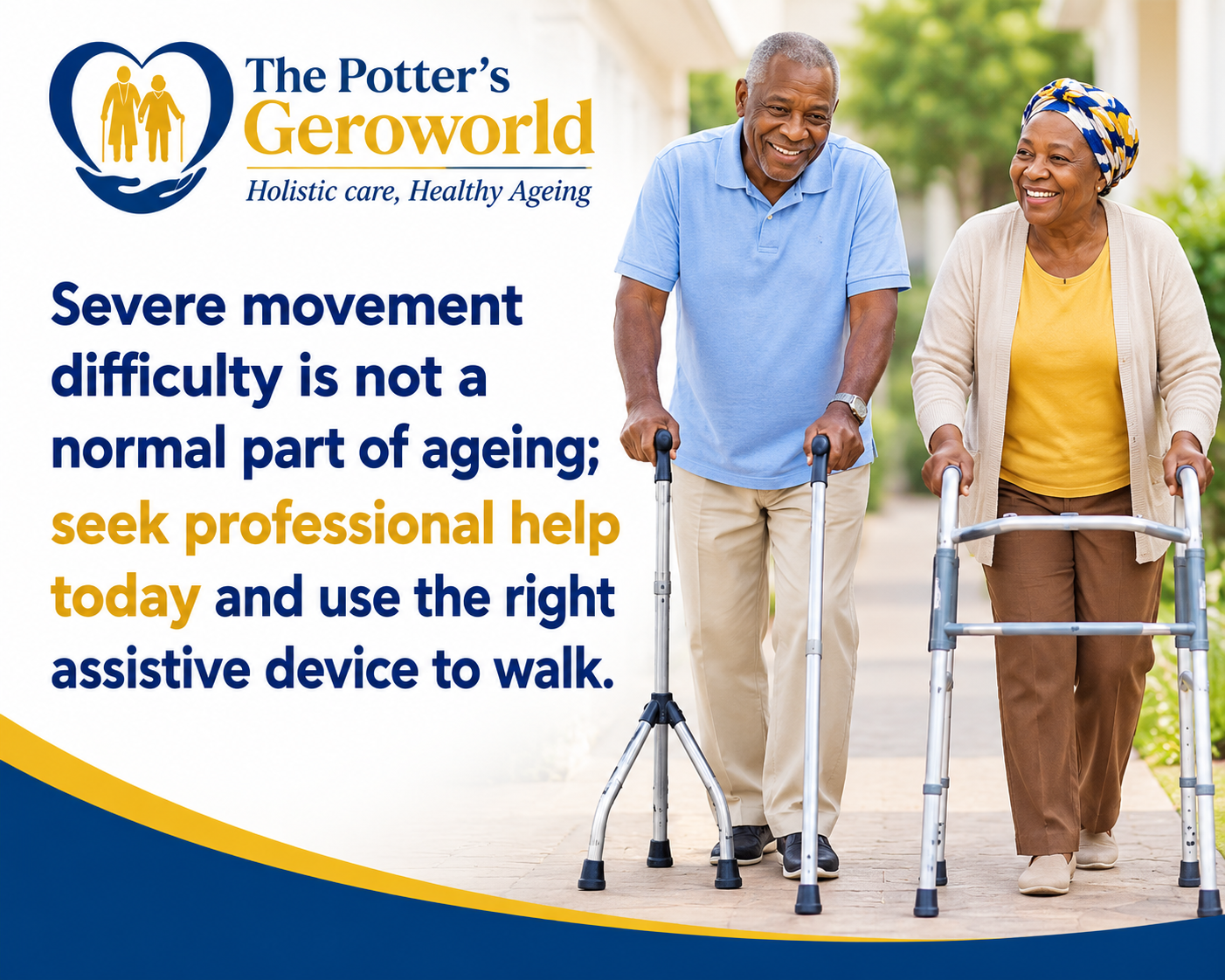
- Address mobility problems early. Changes in walking, balance, strength or the ability to perform everyday activities may benefit from physiotherapy or rehabilitation.
- Plan for future care needs. Discussing healthcare preferences, organising important medical information and considering potential care needs early can make future decisions easier for both older adults and their families.
These steps cannot guarantee a particular lifespan, but they can help support the functional ability, independence and wellbeing that make later life healthier and more fulfilling.
Supporting Older Nigerians to Live Longer and Better
Nigeria’s life expectancy figures reflect real and serious challenges at the population level. But they do not determine what any individual Nigerian’s experience of ageing will look like.
With the right information, healthy habits, preventive healthcare, and appropriate professional support, older Nigerians can work towards maintaining their independence, function, and quality of life well beyond what a headline life expectancy figure might suggest.
At The Potter’s Gerontological Services, our work is focused on helping older Nigerians and their families build healthy, supported ageing. Our services include gerontological consultations, physiotherapy and rehabilitation, health monitoring, nutrition and dietitian support, personal care assistance, and other home-based care services, all designed around each individual’s specific needs and goals.
Reach out to us to learn more or book a consultation.