As Nigerians, we often spend years planning for retirement. We save money, build houses, invest in businesses, and think about how we want to live after leaving full-time work. One area we often overlook is planning for our healthcare needs.
Many people assume they will deal with health issues when they arise or rely on family support if needed. Unfortunately, that is not always enough. As we grow older, healthcare needs often become more frequent and more expensive.
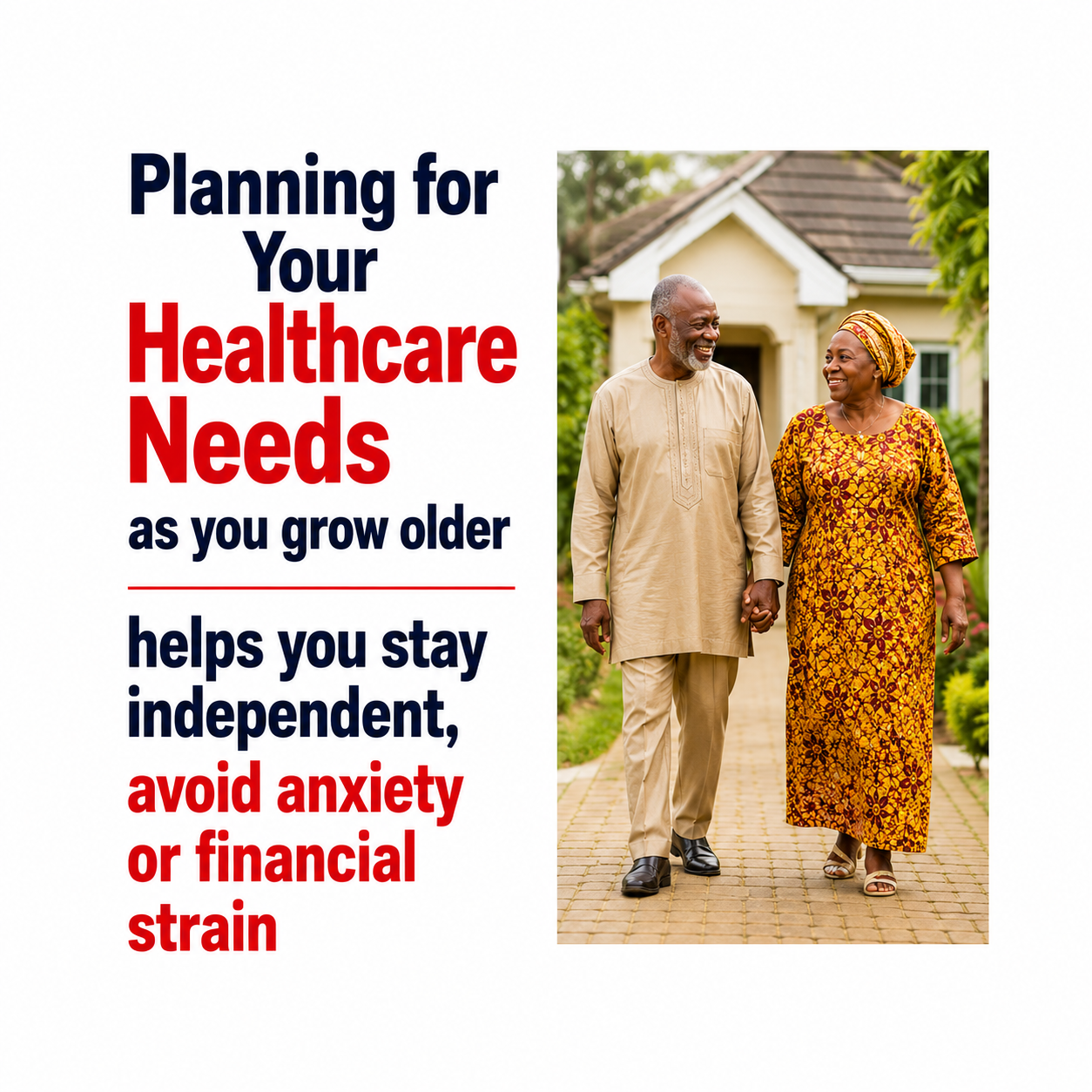
Planning helps you stay healthy, independent, and prepared for whatever later life brings. Here’s how you can plan for your healthcare needs as you get older:
Make Preventive Healthcare a Priority
Many health conditions associated with ageing develop gradually. By the time symptoms appear, treatment may be more complicated and costly.
Regular health screenings can help detect problems early and improve outcomes. As you get older, it is important to keep track of:
- Blood pressure
- Blood sugar
- Cholesterol levels
- Kidney function
- Vision
- Hearing
Routine medical check-ups are equally important, even when you feel healthy. They allow your healthcare provider to monitor changes over time and identify potential concerns before they become serious.
If possible, build a long-term relationship with a trusted healthcare provider who understands your medical history. Preventive care may seem like a small investment today, but it can save high costs and complications in the future.
Plan for Healthcare Costs in Later Life
Healthcare is one of the expenses many people underestimate when planning for retirement.
In Nigeria, many healthcare costs are paid out of pocket. These expenses can include:
- Doctor’s consultations
- Laboratory tests
- Prescription medications
- Emergency treatment
- Hospital admissions
- Rehabilitation services
- Home-based care
Healthcare costs often increase with age, especially if you have a chronic condition or mobility challenges.
A practical step is to create a dedicated healthcare fund separate from your regular savings. It is also wise to include healthcare expenses in your retirement budget rather than treating them as unexpected emergencies.
You do not need to predict every future expense. The goal is simply to be financially prepared when healthcare needs arise.
Understand Your Health Insurance Options
Many Nigerians rely on employer-sponsored health insurance during their working years. The challenge comes after retirement, when that coverage may no longer be available.
Here are some other options worth exploring:
- National Health Insurance Authority (NHIA) programmes
- Private health insurance plans
- Health Maintenance Organisation (HMO) packages
- Retiree-focused healthcare plans where available
When comparing plans, look beyond the monthly premium. Consider the hospitals covered, specialist access, medication coverage, exclusions, and annual limits. The NHIA keeps a list of accredited HMOs. You can use this as a reference when making a decision.
Healthcare needs change over time, so it is important to review your coverage regularly to ensure it still meets your needs.
Invest in Healthy Habits Today
Healthcare planning is also about taking care of your health now.
Healthy habits can lower the risk of many age-related conditions and help you maintain your independence for longer. Focus on:
- Regular physical activity
- Healthy eating
- Adequate sleep
- Proper hydration
- Stress management
- Avoiding smoking
- Limiting alcohol consumption
You do not need a perfect lifestyle to benefit. Small, consistent habits often have a greater impact than drastic short-term changes.
The choices you make today can influence your health, mobility, and quality of life for years to come.
Prepare for Chronic Health Conditions
Growing older does not automatically mean becoming ill, but the risk of developing certain health conditions increases with age.
Common conditions among older adults include:
- Hypertension
- Diabetes
- Arthritis
- Heart disease
- Stroke
- Osteoporosis
- Dementia
- Parkinson’s disease
Preparing for these conditions does not mean expecting them. It means understanding the risks and taking steps to manage them effectively if they occur.
Regular screenings, early diagnosis, consistent treatment, and healthy lifestyle habits can help reduce complications of these conditions and improve quality of life. It is also helpful to understand your family’s health history, as some conditions may run in families.
The earlier potential problems are identified, the more options you are likely to have for treatment and long-term management.
Plan Where and How You Want to Receive Care
Many families only start discussing future care arrangements when a health crisis occurs. By then, decisions often need to be made quickly and under pressure.
Taking time to think about your preferences now gives you more control over future care decisions.
For many older Nigerians, remaining at home for as long as possible is the preferred option. With the right support, this is often achievable. Services that can support ageing at home include:
- Home nursing
- Physiotherapy
- Personal care assistance
- Respite care for family caregivers
- Health monitoring services
Planning allows you to explore these options before they become urgent needs. You can contact The Potter’s Gerontological Services if you want to understand what the best options are for you.
Build a Strong Support Network
Good health is easier to maintain when you have people around you who can provide support when needed.
A strong support network may include:
- Family members
- Friends
- Neighbours
- Faith communities
- Healthcare professionals
- Community organisations
Each group plays a different role. Family members may help with decision-making, while friends and faith communities provide social connection and emotional support.
Plan for Purpose and Wellbeing in Later Life
Retirement changes more than your income. It can also affect your daily routine, social interactions, and sense of purpose.
Many people find the transition easier when they remain engaged in activities they enjoy. This could include:
- Reading and lifelong learning
- Volunteering
- Mentoring younger people
- Religious activities
- Community involvement
- Hobbies and personal interests
Staying mentally and socially active can support emotional wellbeing and cognitive health.
A fulfilling later life is not just about avoiding illness. It is also about maintaining activities and relationships that give life meaning.
Organise Your Health Information
One simple step that can make a significant difference is keeping your health information organised and accessible.
Important documents and information to keep in one place include:
- Medical records and diagnosis history
- Current medications and dosages
- Health insurance information
- Emergency contacts
- Healthcare provider contact details
- Allergy information
- Recent test results
It is also helpful to ensure that at least one trusted family member knows where this information is stored.
Having important records readily available can save time and reduce stress during emergencies or medical appointments.
Talk to Your Family About Future Care Preferences
Planning works best when the people closest to you understand your wishes.
Consider having conversations about:
- Who should help make healthcare decisions if necessary
- Your preferred place of care
- Financial plans for healthcare expenses
- Important medical information family members should know
- Your preferences for future care if you become unable to make decisions for yourself
Your future care preferences are particularly important. If you become ill, have an injury, or experience cognitive decline, and your ability to make decisions is affected, having those wishes discussed and documented can help ensure they are respected and can provide clear guidance if decisions ever need to be made on your behalf.
This is often referred to as an advance care directive. These conversations help reduce uncertainty for loved ones and ensure future healthcare decisions reflect your wishes.
How Potter’s Gerontological Services Can Help
Planning for your healthcare needs in later life can feel overwhelming, but you do not have to do it alone.
At The Potter’s Gerontological Services, we help older adults and their families in Abuja prepare for healthier, more independent lives. Our services include:
- Gerontological consultations
- Home nursing
- Physiotherapy
- Personal care assistance
- Respite care
- Health monitoring
- Other home-based support services
If you would like guidance on planning for later-life care, reach out to us to learn more or schedule a consultation. Our team can also help you develop a care plan that fits your needs and circumstances.
The best time to plan for your future healthcare needs is before they become urgent. Taking action today can help you maintain your health, independence, and peace of mind in the years ahead.